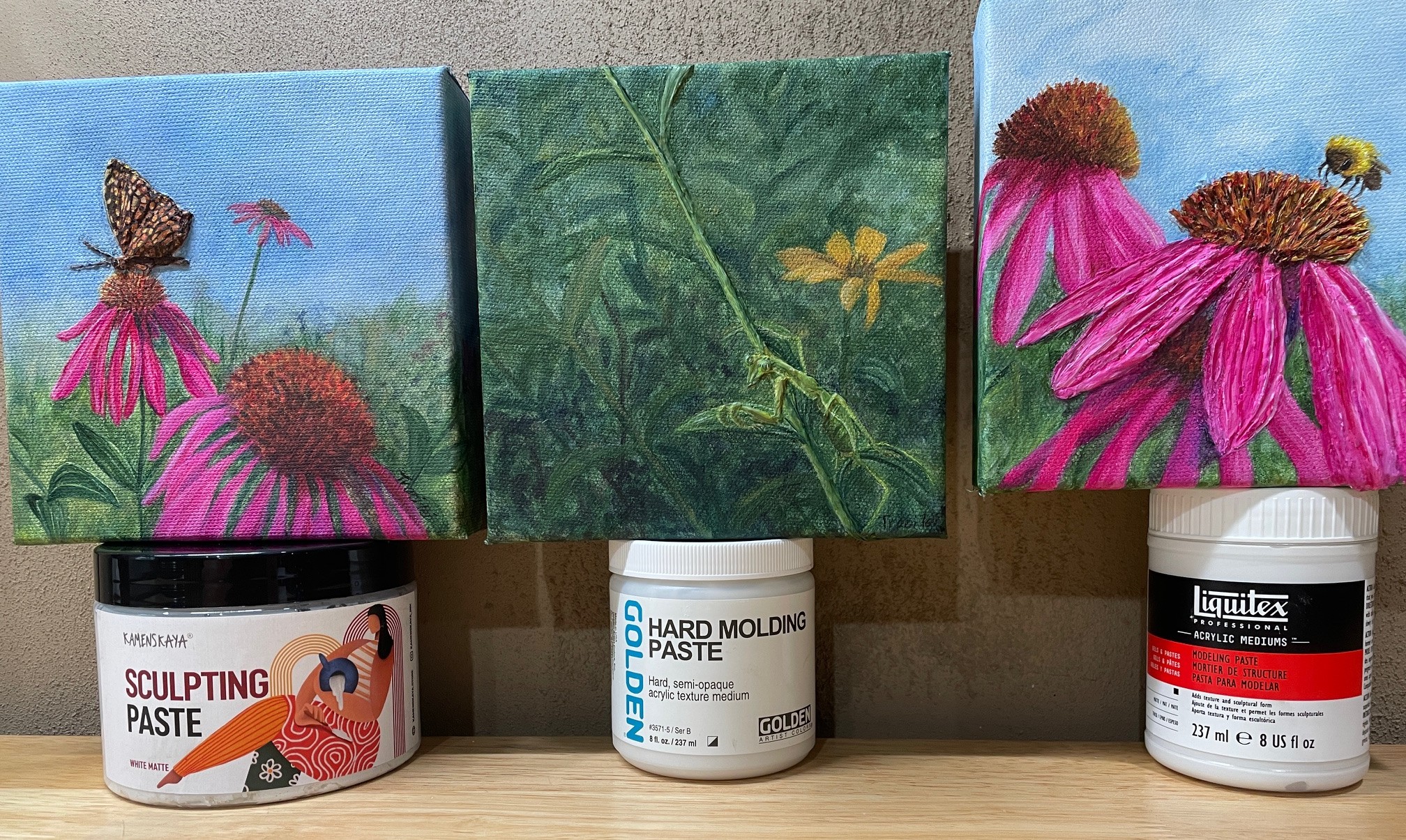
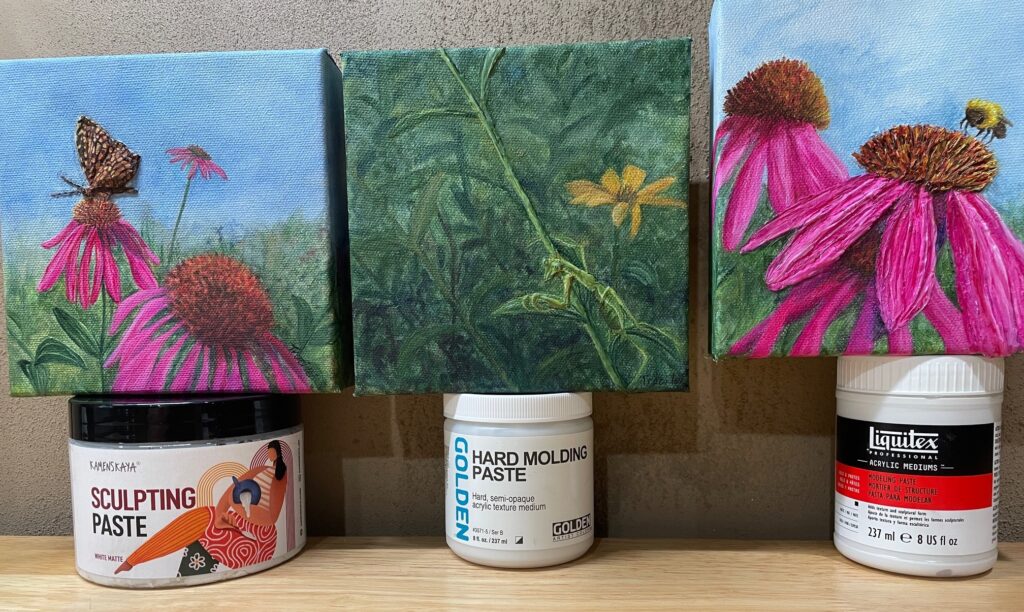
My first residency was at a dominantly ceramic art center, so I decided to add ceramic sculptures as adjacent compliments to or extensions of the two-dimensional paintings in my departing Pivot Year celebration show. Sculpting rekindled my adolescent experiments with adding three-dimensional elements directly to acrylic paintings. I follow several artists who have successfully merged collage and sculpture into hyper-realistic fine art paintings that not only literally project off the canvas but also extend onto the frame or surrounding wall. I decided to start my three-dimensional experiments with a quick comparison of three white sculpture/modeling pastes applied directly to a 6×6 canvas.
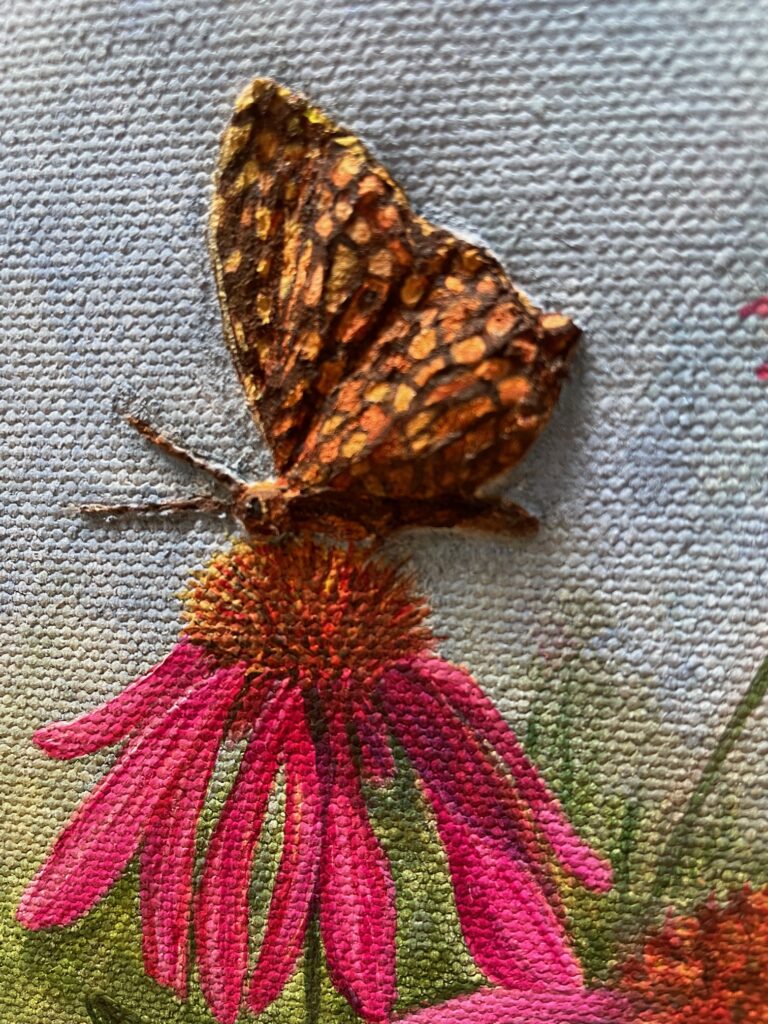
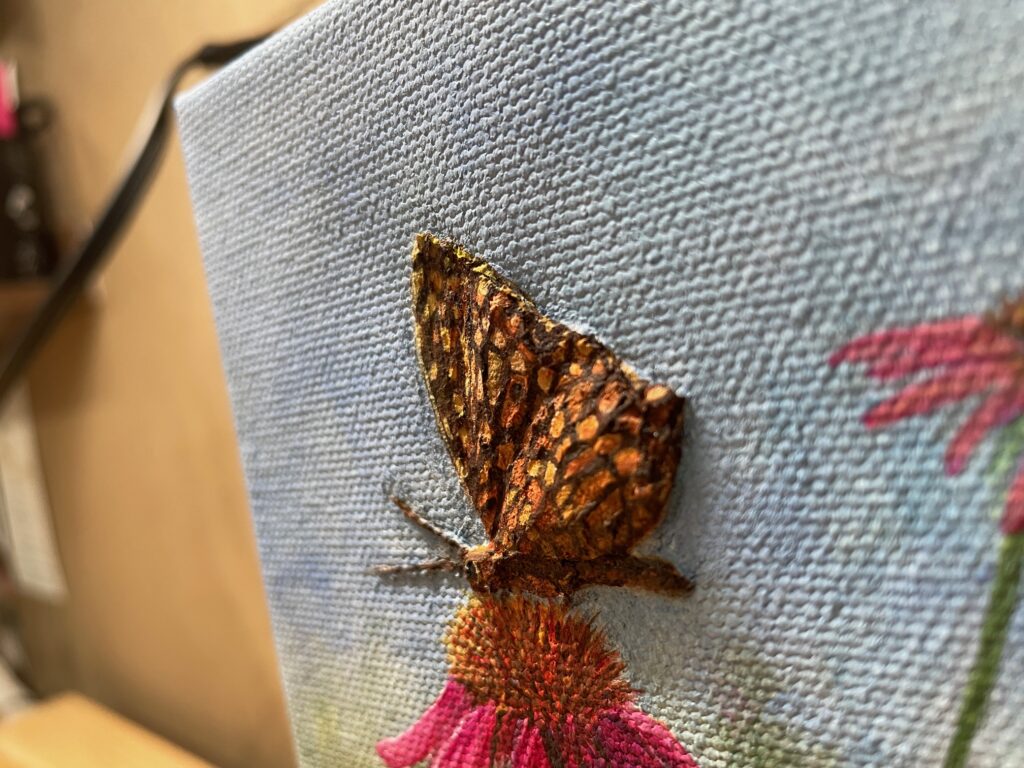
I used Kamenskaya Sculpting Paste for the butterfly in Quick Rest below. This paste is the most matte and thick of the three, and has a dryer, porous texture similar to air-dry clay. I used a palette knife to apply it to the canvas and found it easy to manipulate and smooth with a wet paintbrush. Dry, it resembles fine concrete, which dried faster between multiple layers. I could not sand (to smooth) or carve (to shape) the completed, dried form, so smoothing while wet is critical (unless a rough, jagged form with sharp edges is desired).
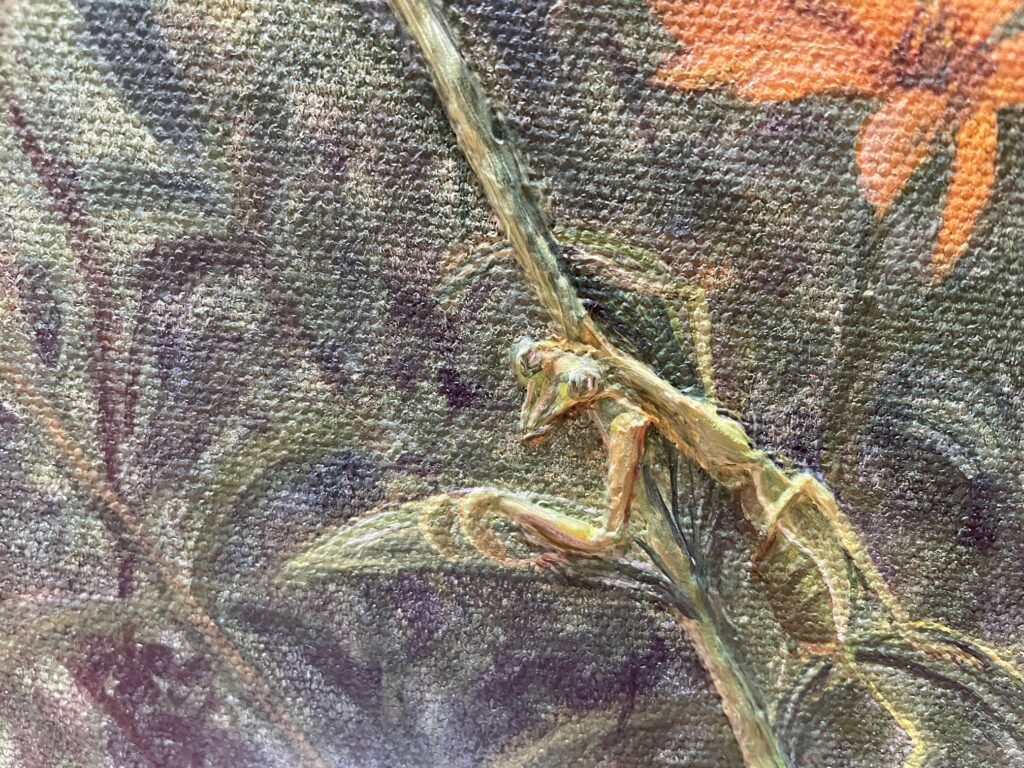
I used Golden Hard Molding Paste for the praying mantis and stem in Camouflage below. This paste looks and applies (with a palette knife) like thick Elmer’s glue. It is easy to smooth and shape with a wet paintbrush. Dry, it becomes semi-transparent and feels like hard plastic. It is the glossiest of the three. I could carve and sand the final, dry form if needed.
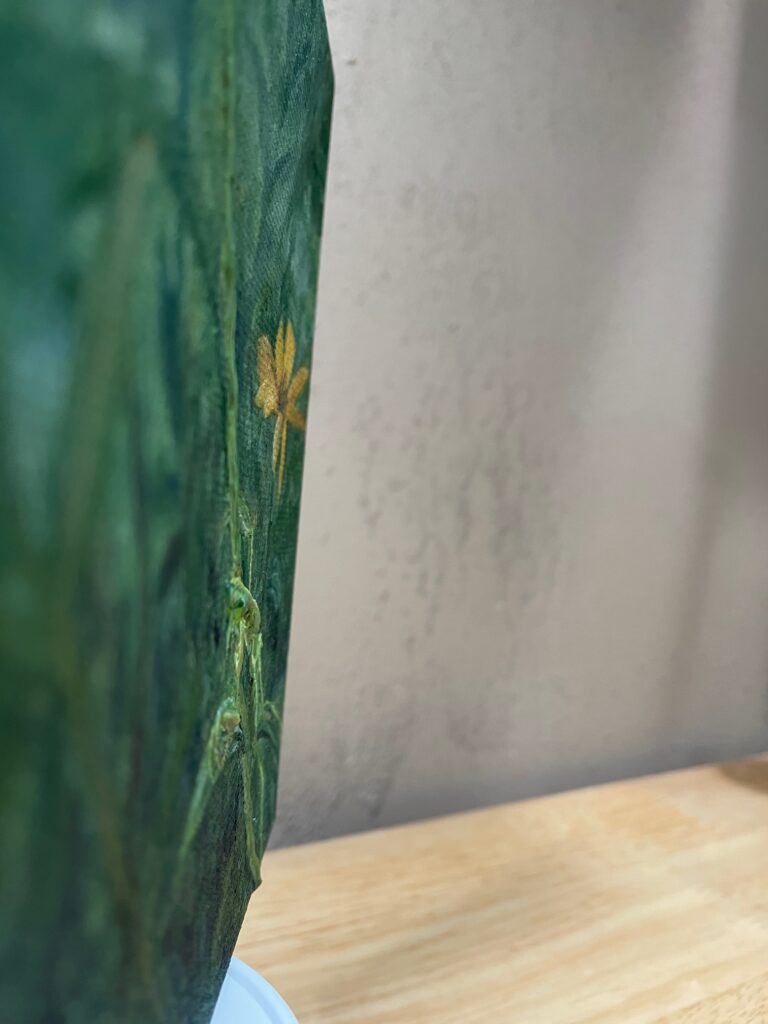
I used Liquitex Modeling Paste for the echinacea in the foreground of Landing below. This paste also looks and applies like thick Elmer’s glue, but is stickier than the Golden, which makes layering and smoothing harder. It dries matte with a texture of dry toothpaste. Of the three, it was the only to have a few cracks when dry, so next time I will cover it to dry more slowly. I could carve and sand the final, dry form if needed.
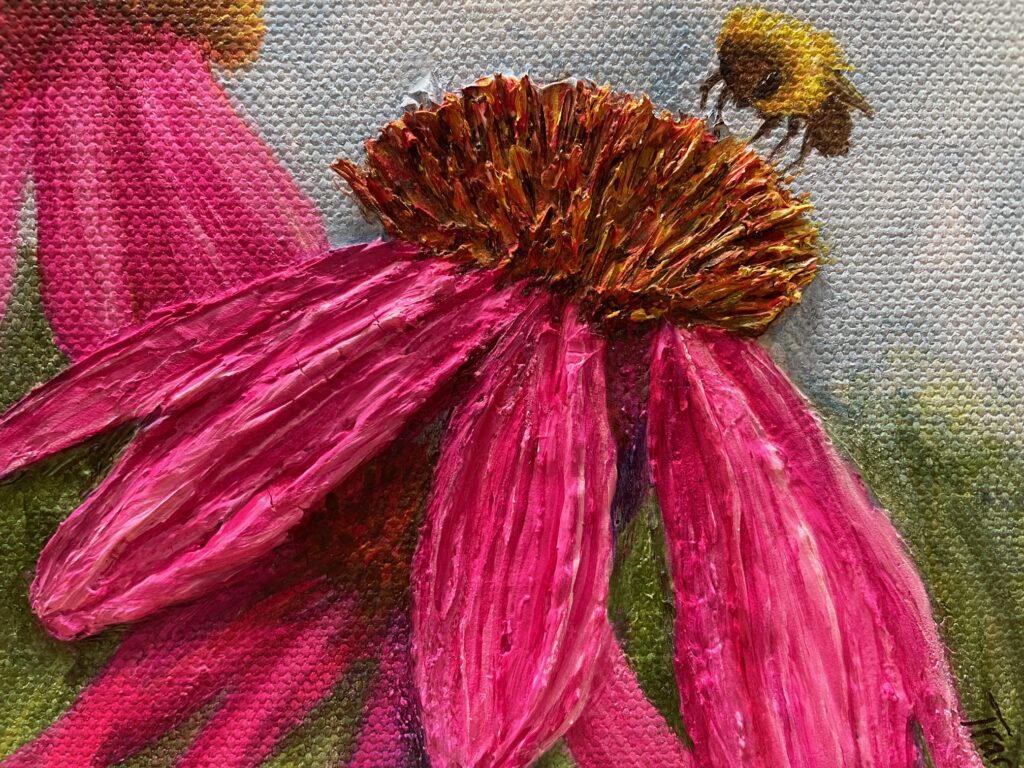
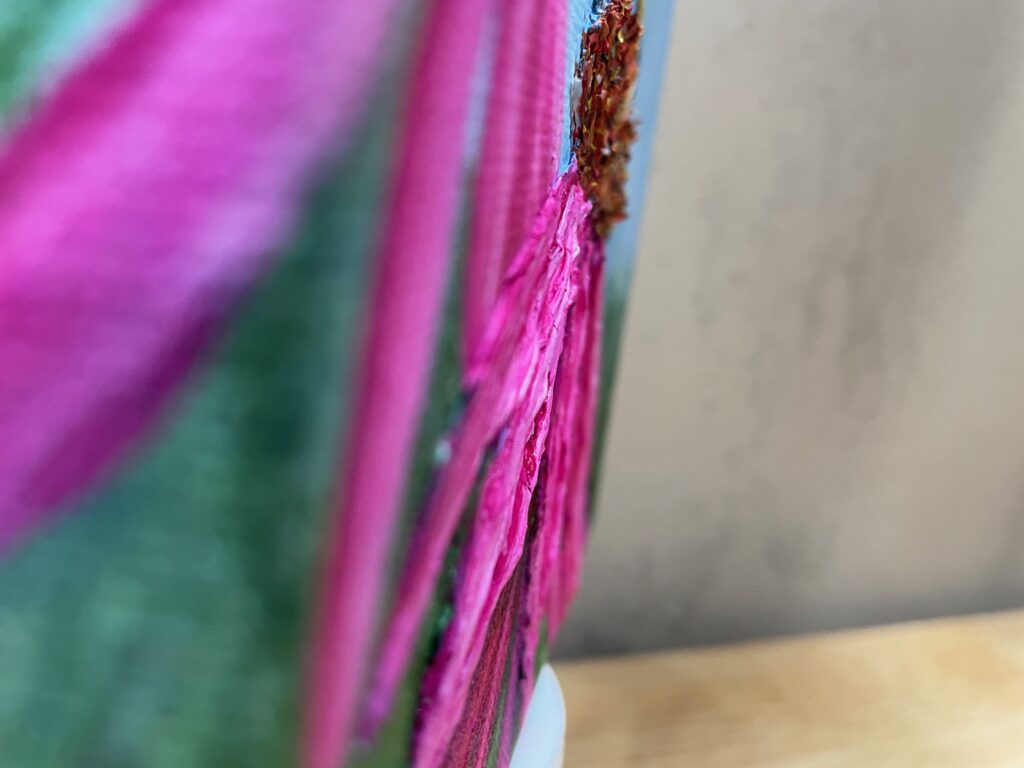
After painting all three with Golden acrylic paint, I was the most pleased with the Kamenskaya Sculpting Paste. Even though it was the hardest to shape and smooth, it was the easiest to paint. There was no drag or slipperiness and the matte finish remained even with glossy acrylic paint, giving the look and feel of velvet. If a glossy finish is preferred, a gloss varnish could be applied to the final.
Second was the Liquitex Modeling Paste because of it’s ability to be carved and sanded if needed. Even though it dried matte, once paint was applied, it took on the finish of the paint. There was no drag or slipperiness when painting.
My least favorite was the Golden Hard Molding Paste. The hard, plastic-like surface was the hardest to paint. It was slippery and required more layers to cover. It’s glossy finish made the paint dry even more glossy, so much so, there was a glare when trying to paint. The final painting itself was also my least favorite. It needs more contrast, but since there are still many more applications, media, and pastes to try, I’m moving on. I’ll keep you posted!